
海贼王
China accelerates LEO satellite deployment with two launches in 12 days, but gap remains in launchpad efficiency, rocket reusability: expert_我的网站

一 |
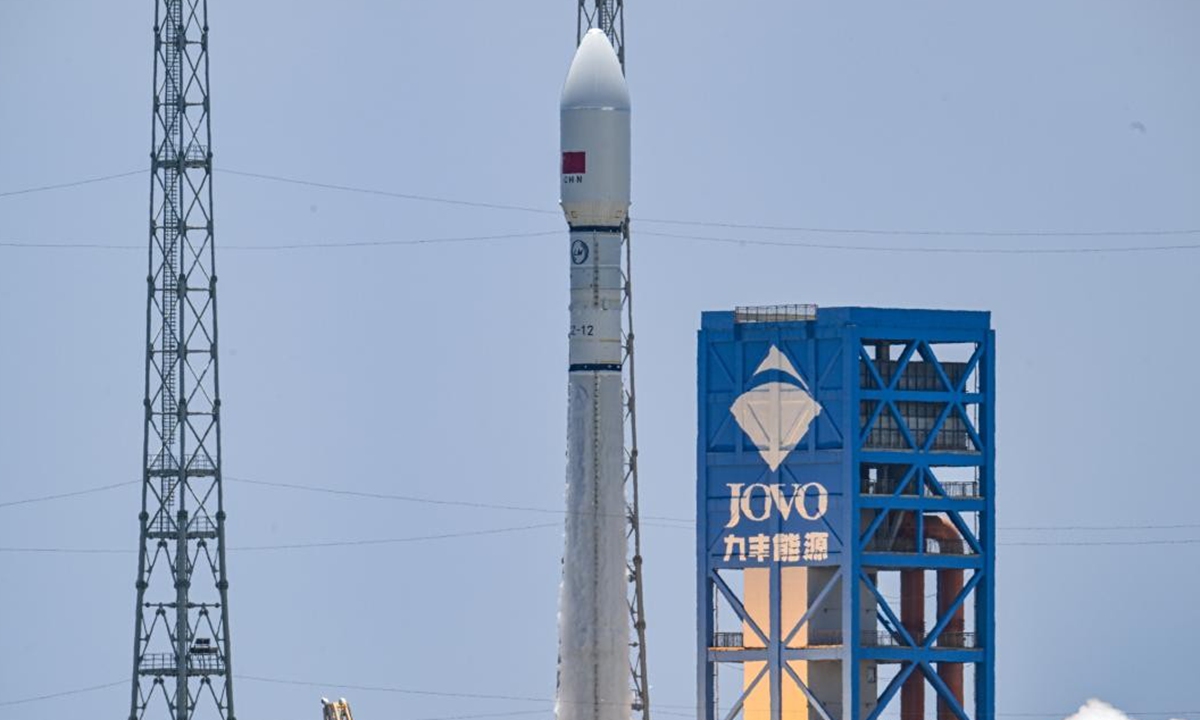
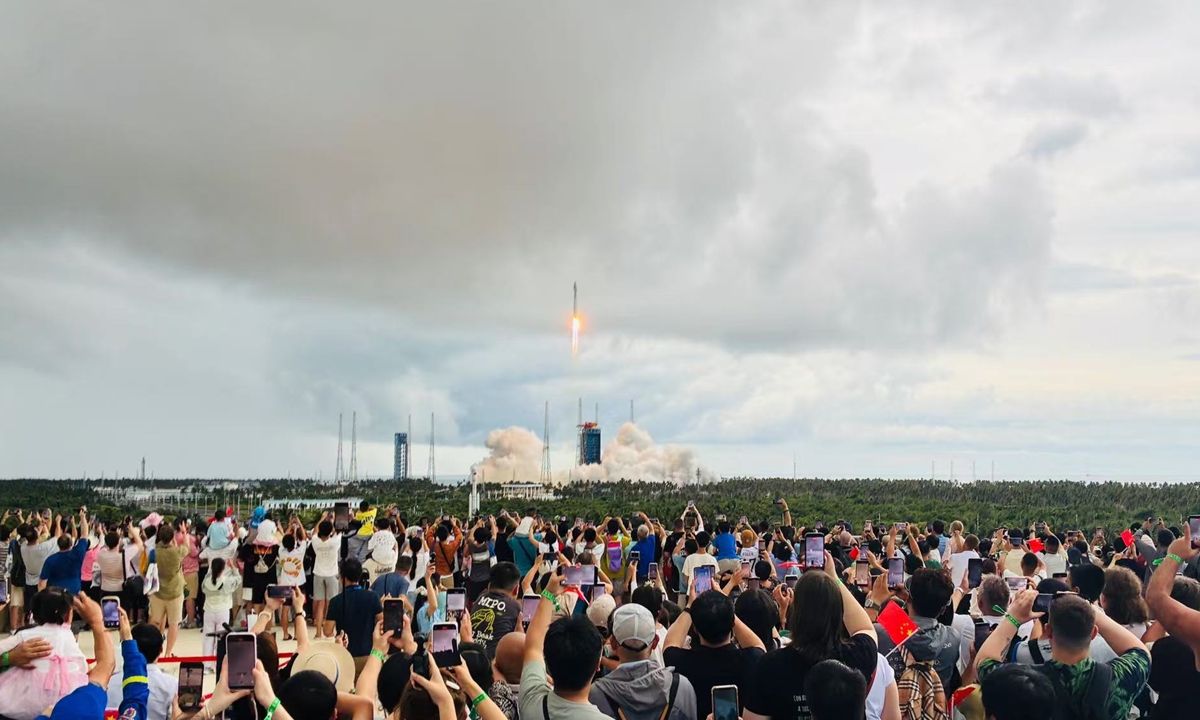
Two successful launches among China's recent frequent moves caught particular attention of space watchers - the 24th group of low-Earth orbit internet (LEO) satellites aboard a Long March-12 rocket was sent from a commercial spacecraft launch site in the southern island province of Hainan on Sunday, 12 days after the 23rd group of LEO satellites aboard a Long March-8A rocket was launched from the same Hainan site on August 4.
Sunday's mission marked the 663rd launch of the Long March series of carrier rockets, which on Monday sent an SEO satellite into preset orbit, per Xinhua.
Experts said the launches of two groups of LEO satellites within 12 days underlined that China is notably accelerating its pace of building its satellite internet constellation.
"The launch of LEO satellites has now entered a regular and cyclical rhythm, with batches of satellites continuously being sent into orbit at relatively stable intervals," Kang Guohua, a senior member of the Chinese Society of Astronautics and a professor of Aerospace Engineering at Nanjing University of Aeronautics and Astronautics, told the Global Times on Monday.
China launched the first group of LEO internet satellites on December 16, 2024, proceeding to the 24th batch in about 20 months. Kang said three major production and launch "assembly lines" are supporting the effort: satellite factories featuring centralized design in Beijing, coordinated supply chains and mass production; rockets with streamlined launch and testing procedures and multiple configurations; and launch sites capable of supporting routine constellation deployment.
The Long March-12, which played a key role in the latest LEO satellite launch, is China's first 4-meter-class single-core-stage carrier rocket and was specifically developed for commercial launch needs. It is about 62.6 meters long, has a liftoff mass of 430 tons and can carry more than 12 tons to low-Earth orbit. Its first stage is equipped with four 1,250-kilonewton pump-fed liquid oxygen-kerosene engines and uses a newly developed coal-based aerospace kerosene, according to Shanghai Academy of Spaceflight Technology.
The rocket adopts a "three-horizontal" launch preparation model: horizontal assembly, horizontal testing and horizontal transportation. Depending on mission requirements, it can use fairings with diameters of 4.2 or 5.2 meters and support both single-satellite and multi-satellite launches into different orbits.
"This flexibility makes the Long March-12 particularly suitable for the 'one rocket, multiple satellites' model required for constellation deployment, making it one of the main launch vehicles currently used for LEO constellation missions," Kang said.
The mission also highlighted the launch site's growing ability to support high-frequency launches. The rocket took only two and a half days from being transported to the launch area to liftoff, setting a record for the shortest time a rocket occupied the launch position at the site, Kang said.
Despite the rapid progress, experts cautioned that the 228 satellites currently in orbit remain some distance from the ultimate goal. China's satellite internet project has a long-term goal of deploying nearly 8,000 satellites and is now in an accelerated "weaving" phase.
China's advantage lies in its ability to control costs and boost production efficiency once satellite manufacturing reaches mass-production scale, another expert surnamed Liu told the Global Times.
"Whether it is the production capacity of AI centers or the factory in Hainan, which has an annual satellite manufacturing capacity of 1,000 units, satellite production itself is not the problem," Liu said. "More bottlenecks lie in the operational efficiency of launch pads and the rocket payload and recovery technology."
The real challenge lies in rocket reusability. Only by lowering launch costs and increasing launch frequency can China sustain a pace of more than one launch per week. This is also the strategic significance of accelerating the development of reusable rocket technology, including the Long March-10B and privately developed rockets, Kang further noted.
Chinese Academy of Engineering academician Deng Zhongliang previously said in an interview that satellite internet will serve as an indispensable space-time infrastructure for 6G, enabling emerging industries worth trillions of yuan, including the low-altitude economy, advanced autonomous driving and the Internet of Things (IoT).
。

二 | 8 月 25 日消息,港交所官网显示,深圳市绿联科技股份有限公司 25 日(今天)向港交所主板提交上市申请,华泰国际担任独家保荐人。

三 | 招股书显示,绿联科技是一家全球科技消费电子品牌企业,产品组合多元化,涵盖充电产品及配件、办公产品、影音产品和存储产品四个产品类别。根据弗若斯特沙利文的资料,2025 年,公司泛拓展类科技消费电子产品出货位居中国内地及全球第一。按收入计,公司 2025 年在泛拓展类科技消费电子产品市场位居中国内地第一及全球第二,市场份额分别为 2.6% 及 1.5%。公司于 2024 年 7 月 26 日在深圳证券交易所上市。从招股书获悉,当前绿联的产品组合包含如下类别:充电产品及配件:主要包括充电器和移动电源,截至 2026 年 6 月 30 日止六个月,充电产品及配件实现收入人民币 26.667 亿元,较截至 2025 年 6 月 30 日止六个月增长 50.0%。办公产品:包括扩展坞、多屏显示及专业键鼠外设产品,专为满足用户于工作及居家环境下的需求而设计。其中,扩展坞与集线器系列产品销售表现长期稳居亚马逊、天猫等主流电商平台销量榜首。影音产品:提供一系列高清音视频采集、连接和传输设备以及耳机类声学产品,视讯产品支持 HDMI2.1 及 DP2.1 等协议,可实现 8K 及 16K 内容的无损传输。在声学领域,还将 AI 算法融合于 TWS 耳机等音频产品中。存储产品:主要为 NAS 产品线。存储产品收入保持较快增长,成为往绩记录期间增速最快的产品线之一。截至 2026 年 6 月 30 日止六个月,来自 NAS 产品的收入为人民币 6.4 亿元,较截至 2025 年 6 月 30 日止六个月增长 115.9%。

四 | 绿联 2023 年、2024 年及 2025 年分别录得净利润人民币 3.937 亿元、人民币 4.605 亿元及人民币 7.035 亿元,于 2023 年至 2025 年的复合年增长率为 33.7%。净利润由截至 2025 年 6 月 30 日止六个月的人民币 2.736 亿元上升 58.0%,至 2026 年同期的人民币 4.322 亿元。2023 年、2024 年、2025 年毛利率整体维持稳定,分别为 36.9%、36.8%、36.5%。
Current article:http://1uwd.cuancuguanzhongnieqinyazhun.cyou/vmb3g9/jb7zwk.html
Published on:11:31:00