
看不见的客人
Chinese scientists develop ‘brain-reading’ AI model to help predict depression risk, may inspire future emotional-perception humanoids_我的网站

一 |
Chinese scientists have developed a “brain-reading” AI model that could help predict the risk of depression among adolescents up to four years in advance by analyzing how humans respond to facial expressions, a technology expected to inspire future development of embodied intelligent humanoids capable of perceiving human emotion and thoughts through nuanced facial cues.
WHO data show that around 332 million people worldwide have depression, about one-third of whom have treatment-resistant forms of the condition. In China, an estimated 95 million people suffer from depression, National Business Daily reported, citing statistics from the China Mental Health Survey.
Using data from a population-based longitudinal adolescent cohort recruited across several European countries, the research team led by Lu Han, assistant professor at the School of Artificial Intelligence, Shenzhen University, has built an AI model that predicted which 19-year-olds were more likely to develop depression at the age of 23. The predictions were backed up by an independent clinical cohort of individuals with depression. The team’s paper was published in the journal Science Advances this month.
According to Lu, the study used brain scans taken at age 19 to predict depression-related symptoms at age 23. The study focuses on adolescence because the transition from adolescence to early adulthood is a key developmental period when depressive symptoms can increase rapidly. The earlier risks are identified, the greater the opportunity for prevention, Lu told the Global Times on Monday, adding that the findings need to be further validated in middle-aged and older adults and across different ethnic groups in future research.
In this study, the researchers analyzed data from adolescents in the IMAGEN, a population-based longitudinal cohort recruited across several European countries. At age 19, participants underwent an fMRI emotional-face task, and their emotional symptoms were assessed using standardized questionnaires. Genetic data obtained from blood samples were also analyzed, and participants were followed up at age 23. The researchers examined whether neural representations of angry faces at age 19 were associated with emotional symptoms and could predict elevated emotional symptoms four years later.
According to Lu, people without depression can more easily distinguish emotional changes based on others’ facial expressions and respond accordingly – for example, responding with friendliness to a smiling expression. But people with depression cannot do this, and are more likely to assume people are angry with them.
A brain-aligned deep-learning model developed by Lu’s team suggested that those participants whose brains were less able to distinguish between different facial emotions and tended to perceive others as angry were more likely to develop symptoms of depression and anxiety in adulthood.
The hypothesis that adolescents at risk of depression may respond differently to other people’s facial expressions than those without such risk based on the negative information processing bias long observed in depression research: people at risk of depression are more likely to notice, interpret, or remember negative social information, Lu said.
The researchers focused on angry facial expressions because they signal social threat and rejection, which are closely linked to interpersonal difficulties and negativity bias associated with depression. They hope to further understand how this bias develops within the visual system.
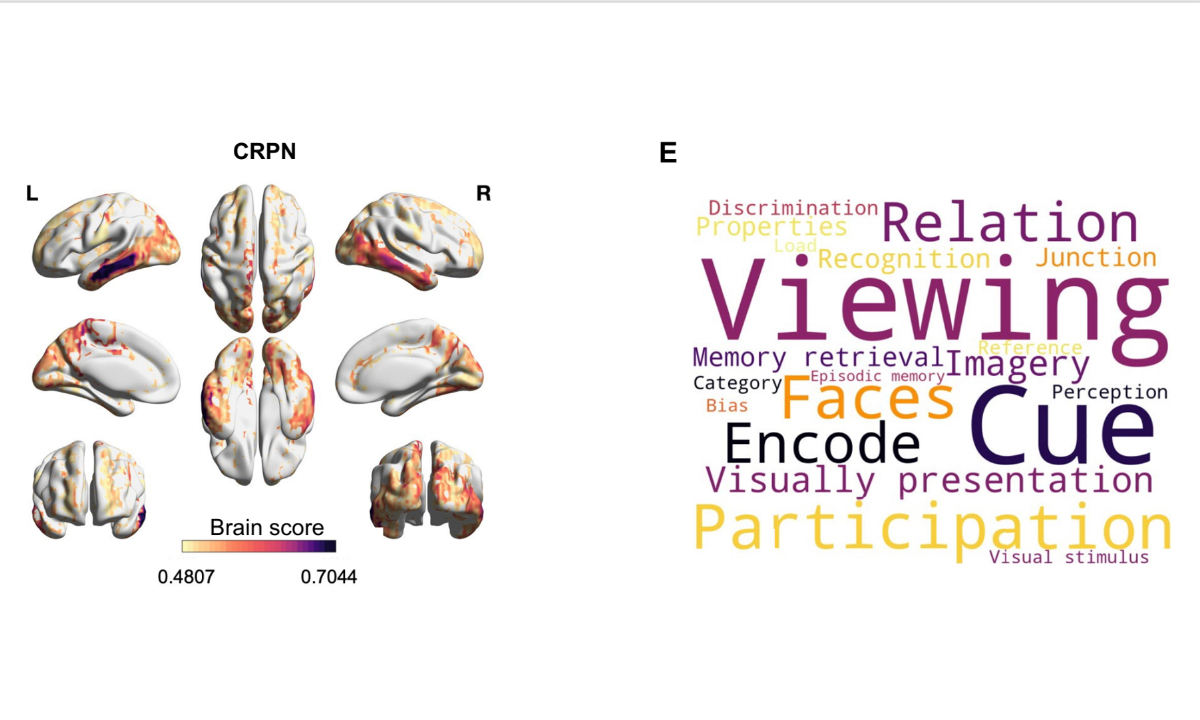
Building on this, they created a deep learning model, which mimics how the brain processes visual information, to predict how the brain encodes abstract emotional concepts such as anger.
They found that 19-year-olds whose response to facial expressions was skewed in favour of negative emotions or memories were the most likely to develop some form of depression.
Based on these findings, Lu’s team then developed a marker that can identify possible warning signs.
According to Lu, the study found that the computational biomarker was linked to the depression-related variant rs11123030 and polygenic risk for depression, suggesting that genetic susceptibility may affect emotional perception. It also provided predictive information beyond family stress and socioeconomic factors, complementing rather than replacing environmental risk factors. Therefore, depression is neither purely genetic nor purely psychological, but a complex mental disorder arising from the interplay of genetic susceptibility, brain development, emotional and cognitive processes, and life experiences.
According to Lu, the study is also expected to advance AI by aligning deep neural networks with human brain activity and using parameter perturbations to probe neural mechanisms, allowing models to both predict and explain how biases may arise.
The findings suggest that future affective computing and embodied AI should go beyond simply labeling facial expressions, incorporating visual details while preventing prior assumptions from overriding real-time sensory input, Lu said, adding that the findings could provide valuable insights for developing more interpretable robotic perception systems that more closely emulate the way humans process emotions.
。
[ 资讯] 日前,上汽通用官方再次发布了新款别克E5(参数|询价)的内饰官图。
。
二 | 结合此前消息,新车相较现款由内到外进行了47项改进与提升,包括设计造型、性能表现、智能交互与舒适便利等多个方面,并计划会在近期正式上市。

三 | (文/ 郭辰)
Current article:http://1uwd.cuancuguanzhongnieqinyazhun.cyou/q9yc2f/yay5v.html
Published on:09:37:35
栏目相关
- 这个夏天,C罗去哪?
- 9月14日0至21时 新疆新增本土无症状转确诊病例2例 本土无症状感染者21例
- 杭州市举办职工AI+金融行业研究大赛
- 青海海南州兴海县发生3.6级地震,震源深度10公里
- 济南CBD新商街雏形初现 部分商家率先入驻经营
- 2026年全国“我们的节日·七夕”(河北邢台)主题文化活动举办
- Box Office Report: Dhurandhar Continues Its Glorious Run on Day 6
- 民宅内查获42处大麻种植点 警方提醒房东:注意检查你的房产
- 大力优化营商环境 加快高质量发展|零工市场+零工超市,破解用工就业“两头难”
- 德广联:德国央行行长放风 欧洲央行加息不足以遏制通胀进一步加息势在必行_内格尔_Nagel
- China highlights land restoration efforts at COP17 'China Corner'
- 猴痘一个月后传入新加坡?辟谣传言:由新冠疫苗引起
热门排行
- “第一夫人”被查,他怎么办?
- 温网夺冠后,德约目标是美网
- China says EU's probe into e-commerce giant JD.com unlawful
- Former nurse sentenced to 30 years for sexually assaulting multiple inmates at Oregon's only women's prison
- Gunmen kill 6 construction workers in volatile southwestern Pakistan
- 以党建为引领 推动抚顺文艺事业繁荣发展 ——抚顺市文联成立70周年文艺工作综述之一
- 【阪神】優勝候補筆頭も「流れ的には中日」 猛虎内部が〝猛警戒〟する理由
- 新航获准投资印度航空公司
- 过量输液对健康有害:吉林省几家医院已宣布取消成人普通门诊输液。
- 科隆展参展阵容炸裂!数十款大作即将登场
- 汉奸行径!日本政客参拜靖国神社,民进党当局竟表示“尊重”
- 美国国家情报总监否认“中国试图干预美国大选”:目前没看到证据